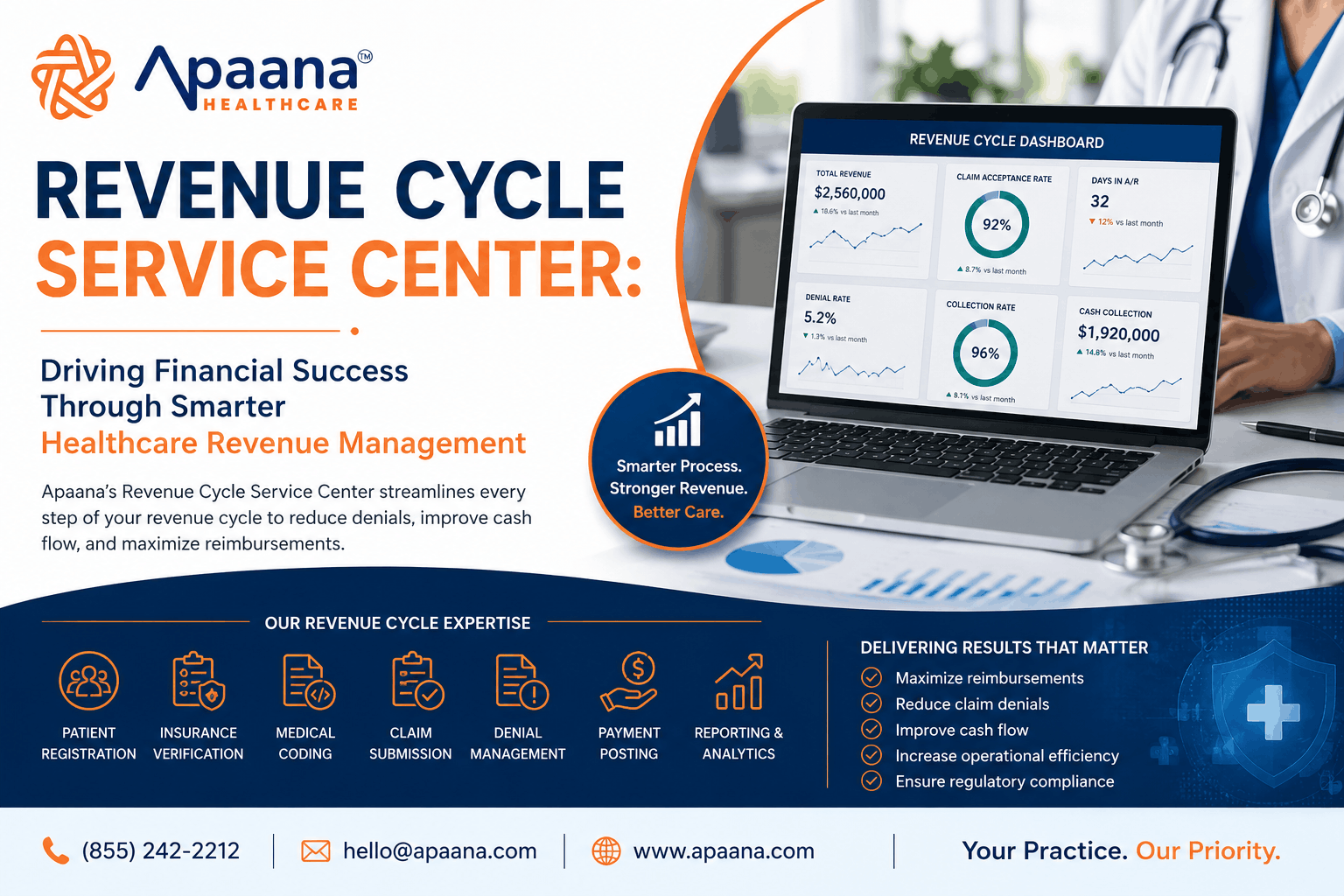

From patient registration to final payment collection, every step in the revenue cycle affects a practice’s profitability. Effective Healthcare Revenue Cycle Management ensures that providers receive timely reimbursement for services rendered while minimizing denials, administrative burdens, and compliance risks.
What Is Healthcare Revenue Cycle Management?
Healthcare Revenue Cycle Management refers to the process of managing the financial lifecycle of a patient encounter. It begins when a patient schedules an appointment and continues through insurance verification, coding, claim submission, payment posting, and collections.
A strong revenue cycle management strategy helps healthcare organizations:
- Improve cash flow
- Reduce claim denials
- Accelerate reimbursements
- Enhance patient satisfaction
- Maintain regulatory compliance
Without effective Healthcare Revenue Cycle Management, healthcare providers may struggle with delayed payments, increased administrative costs, and revenue leakage.
Why Healthcare Revenue Cycle Management Is More Important Than Ever
Healthcare reimbursement models have become increasingly complex. Insurance carriers frequently update their requirements, coding guidelines change regularly, and compliance expectations continue to rise.
Effective Healthcare Revenue Cycle Management helps providers navigate these challenges by creating streamlined processes that improve efficiency and financial performance.
Organizations with optimized revenue cycle operations often experience:
- Higher clean claim rates
- Lower denial percentages
- Faster reimbursement timelines
- Improved operational efficiency
- Better financial forecasting
These advantages make Healthcare Revenue Cycle Management one of the most important investments a healthcare organization can make.
The Role of Medical Billing and Coding in Revenue Cycle Success
Accurate Medical Billing and Coding serves as the foundation of every successful revenue cycle. Every diagnosis, procedure, and treatment must be translated into standardized codes that insurance companies can process correctly.
When Medical Billing and Coding errors occur, providers may experience:
- Claim denials
- Delayed reimbursements
- Compliance concerns
- Revenue loss
Accurate coding ensures that claims reflect the services provided and meet payer requirements. This helps healthcare organizations maintain steady cash flow and reduce costly rework.
Integrating Medical Billing and Coding into a comprehensive revenue cycle strategy improves both financial outcomes and operational efficiency.
Why Health Care Provider Credentialing Supports Revenue Growth
One of the most overlooked components of Healthcare Revenue Cycle Management is provider enrollment and credentialing. Claims cannot be reimbursed if providers are not properly enrolled with insurance payers.
Effective Health care provider credentialing ensures that:
- Providers are verified and approved by payers
- Enrollment records remain current
- Claims are submitted under active provider credentials
- Reimbursement delays are minimized
By integrating Health care provider credentialing into revenue cycle operations, healthcare organizations can prevent enrollment-related denials and improve claim acceptance rates.
Credentialing is not simply a compliance requirement; it is a financial necessity.
How Medical Billing Companies Improve Revenue Cycle Performance
Many healthcare organizations partner with professional Medical Billing Companies to improve efficiency and reduce administrative burdens.
Experienced Medical Billing Companies provide services such as:
- Insurance verification
- Claim submission and tracking
- Payment posting
- Denial management
- Revenue reporting
- Compliance monitoring
By outsourcing billing functions, healthcare providers gain access to specialized expertise and advanced technology that improve reimbursement outcomes.
Professional billing partners also help organizations identify revenue leaks and implement corrective strategies that strengthen overall financial performance.
The Importance of Best Medical Licensing Services
Provider licensing plays a vital role in maintaining compliance and reimbursement eligibility. Healthcare professionals must maintain active licenses to practice and bill insurance carriers.
The Best medical licensing services help providers manage:
- Initial licensing applications
- License renewals
- Multi-state licensing requirements
- Compliance documentation
When integrated with Healthcare Revenue Cycle Management, the Best medical licensing services help ensure uninterrupted provider participation and prevent reimbursement disruptions caused by expired or inactive licenses.
Maintaining accurate licensing records supports both compliance and revenue generation.
Common Challenges in Healthcare Revenue Cycle Management
Healthcare organizations frequently encounter challenges that affect financial performance, including:
- High claim denial rates
- Credentialing delays
- Coding errors
- Incomplete documentation
- Regulatory changes
- Increasing patient payment responsibility
Without a structured Healthcare Revenue Cycle Management strategy, these challenges can significantly impact profitability.
Successful organizations address these issues through proactive management, technology integration, and experienced administrative support.
Benefits of an Optimized Revenue Cycle
Healthcare providers that invest in effective Healthcare Revenue Cycle Management experience measurable improvements across multiple areas.
Faster Reimbursements
Clean claims and accurate documentation reduce payment delays.
Reduced Denials
Integrated credentialing and coding processes improve claim acceptance rates.
Improved Cash Flow
Efficient billing operations create predictable revenue streams.
Better Compliance
Continuous monitoring helps organizations meet regulatory requirements.
Enhanced Patient Experience
Transparent billing and accurate financial communication improve patient satisfaction.
These benefits contribute directly to long-term organizational growth and stability.
Why Healthcare Providers Choose Apaana
At Apaana Healthcare, we help healthcare organizations optimize every stage of the revenue cycle. Our comprehensive solutions combine billing expertise, credentialing support, licensing assistance, and compliance management to create a seamless financial workflow.
Our services include:
- Advanced Healthcare Revenue Cycle Management
- Professional Medical Billing and Coding support
- Comprehensive Health care provider credentialing
- Collaboration with trusted Medical Billing Companies
- Assistance aligned with the Best medical licensing services
Our team works proactively to reduce denials, accelerate reimbursements, and improve financial performance while allowing providers to focus on patient care.
Building a Stronger Financial Future Through Revenue Cycle Excellence
The healthcare industry continues to evolve, making efficient financial management more important than ever. Organizations that invest in strong Healthcare Revenue Cycle Management strategies position themselves for sustainable growth, improved profitability, and long-term success.
By combining accurate billing, credentialing, licensing, and compliance support, healthcare providers can create a streamlined operation that supports both patient care and financial health.
With the right partner and processes in place, revenue cycle management becomes more than an administrative function; it becomes a strategic advantage.